Wisdom Teeth Removal in Brampton and Ancaster
Most people need their wisdom teeth removed because there isn’t enough room for them to come in properly. At Parkview Oral & Maxillofacial Surgery, our surgeons remove wisdom teeth in our Brampton and Ancaster offices, often under IV sedation so you stay relaxed and comfortable throughout.
What Are Wisdom Teeth?
Wisdom teeth, or third molars, are the last teeth to come in, usually in the late teens or early twenties. Most mouths have room for 28 teeth, but adults typically have 32. When there isn’t enough space, wisdom teeth can become impacted: trapped under the gum or bone, or growing in at an angle.
Signs Your Wisdom Teeth May Need to Come Out
- Pain, swelling or stiffness at the back of your jaw
- Gum infection around a partially erupted tooth
- Crowding or shifting of your other teeth
- Damage to the neighbouring molars
- Cysts forming around an impacted tooth
Some impacted wisdom teeth cause no symptoms at all, which is why an x-ray assessment matters.
Types of Impaction
- Soft tissue impaction: the tooth has broken through the bone but is still covered by gum.
- Partial bony impaction: the tooth is partly covered by jawbone.
- Complete bony impaction: the tooth is fully encased in jawbone.
What Is the Best Age to Remove Wisdom Teeth?
Wisdom teeth are usually first assessed in the mid-teenage years by a dentist, orthodontist or oral surgeon. Studies show that early evaluation and treatment lead to better outcomes, and removing problem wisdom teeth early generally means a lower surgical risk and an easier recovery.
Your Consultation
Your surgeon will examine your mouth and review your x-rays to see how your wisdom teeth are positioned and whether they’re causing, or likely to cause, problems. We’ll explain your options, your sedation choices and the possible risks before any treatment, including temporary numbness from nerve irritation and sinus complications for upper teeth.
Sedation Options
Wisdom teeth removal can be done under:
- Local anaesthesia, which numbs the area while you stay awake
- Nitrous oxide (laughing gas), which helps you relax
- IV sedation, the most common choice for wisdom teeth, which keeps you deeply relaxed and comfortable
IV sedation is provided in our offices with modern monitoring equipment. Our registered nurses are ACLS-certified, and our surgeons and several nurses also hold Pediatric Advanced Life Support (PALS), which is reassuring for parents of teenage patients.
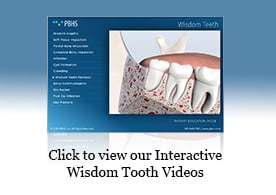
Wisdom Teeth Presentation
To provide you with a better understanding of wisdom teeth, we have provided the following multimedia presentation. Many common questions pertaining to wisdom teeth are discussed.
Surgery Day
After your teeth are removed, the gum is closed with stitches, and you’ll rest under our care until you’re ready to go home. You’ll leave with written aftercare instructions, any prescriptions you need, and a follow-up appointment if required. If you’ve had IV sedation, an adult must drive you home.
Recovery
Some swelling, mild bleeding and discomfort are normal. Swelling usually peaks two to three days after surgery and then improves day by day. Ice packs, soft foods, and following your aftercare instructions closely will help you heal faster.
Read our full After Wisdom Tooth Removal instructions.
Cost and Insurance
The cost of wisdom teeth removal depends on how many teeth are removed, how impacted they are, and your type of sedation. Your surgeon will give you a treatment estimate at your consultation. Consultations are $135–$195, and a panorex x-ray is $115 if needed. See Office Fees.
Our staff prepare your insurance claim forms, and we can prepare a predetermination so your insurer can estimate your coverage before surgery.
Frequently Asked Questions
Do I need a referral?
Yes. Please bring a referral from your dentist or physician to your consultation.
Will I be awake during surgery?
That depends on the type of anaesthesia you choose. With IV sedation, most patients feel deeply relaxed and remember little of the procedure. Your surgeon will help you choose the right option.
Can I drive home after wisdom teeth removal?
Not if you’ve had IV sedation. An adult must drive you home and should stay with you for the rest of the day.
What is dry socket?
Some discomfort after wisdom teeth removal is normal and should gradually improve each day. Dry socket happens when the blood clot protecting the tooth socket is dislodged before the area has healed. The main sign is pain that gets worse instead of better. To help prevent it, avoid straws and vigorous rinsing, and call us if your pain is increasing rather than easing.
Do wisdom teeth always need to be removed?
No. If they come in fully, are positioned correctly, and the surrounding gums are healthy, wisdom teeth can stay. An x-ray assessment is the only way to know.
Book a Wisdom Teeth Consultation
Ask your dentist for a referral, then call the office nearest you.
Brampton
7920 Hurontario Street, Unit 38
(905) 456-7770
Mon–Fri, 8:00 a.m.–4:00 p.m.
Ancaster
26 Legend Court, Unit 1
(289) 239-7373
Mon–Fri, 8:00 a.m.–4:00 p.m.